


Custodial Crypto Wallets: Pros and Cons


 You don’t fully control your custodial crypto walletYou can’t control the level of security of the solutionLimited operational flexibility
Custodial vs Non-Custodial Crypto Wallets
What’s the difference between custodial and non-custodial crypto wallets:

Custodial Wallet

Non-Custodial Wallet (BitHide)
 Who Manages Funds
 Ease of Use
 Security Level
 Access Recovery
BitHide: Software for Non-Custodial Wallet for Business
Key features of the self-hosted payment solution:
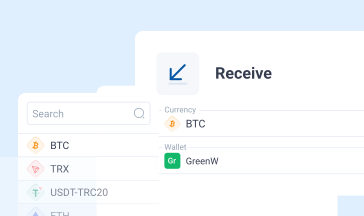
Accept Crypto Payments
Add any payment method in your non-custodial wallet. Receive and store Bitcoin, stablecoins (USDT & USDC), Ethereum, Litecoin, Binance Coin, TRON, and TON.
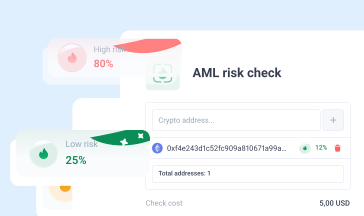
Integrated AML Check for Cryptocurrency
Screen cryptocurrency for AML risk through integrated providers to stay compliant.
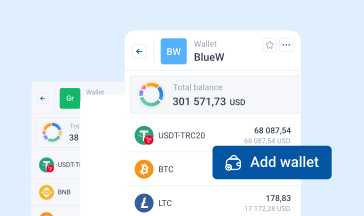
Generate an Unlimited Amount of Wallets
Create and manage an unlimited amount of non-custodial wallets, and control them all from a single place.
Multiple Integration Options
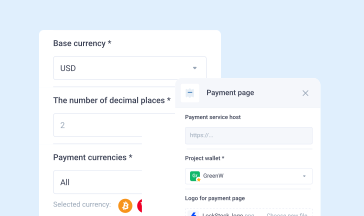
Connect via payment page, widgets, or API gateway integration — choose the integration method that fits your business best.
Automate Mass Payouts
Process bulk payouts instantly. Execute thousands of cryptocurrency transactions in just a few clicks.
Save on TRON Payments
Make payments in USDT (TRC20) using Energy — reduce TRX costs by up to 50%.
Secure Crypto Wallet for Business
Unlike a non-custodial hardware wallet, BitHide offers both securely and scalable business features
Self-Hosted Solution
BitHide crypto wallet is self-hosted. You own your wallets, store your keys and seed phrase, and run all transactions through your non-custodial wallets.
Enterprise-Grade Protection
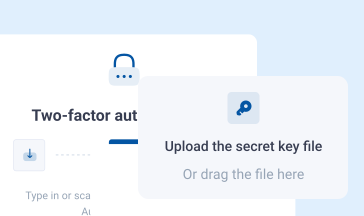
Data and digital assets are shielded with AES-256 encryption standard, 2FA, PIN code, fingerprint authentication, and real-time backups.
Role-Based Access Control (RBAC)
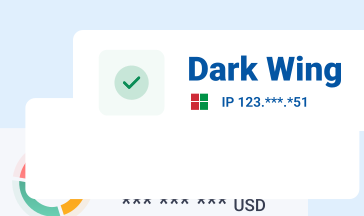
Manage employee access to your wallet and use double transaction approval to maintain full control and prevent unauthorized actions.
How to Start Accepting Crypto with BitHide
A few simple steps to start build your non-custodial solution under full control:



BitHide Wallet Features

Integrated AML checks

Assess asset risk with provider-based AML screening for incoming and outgoing flows.

Multi-Wallet Access & Roles
Assign account access to users based on their roles, responsibilities, and permission levels.

Personal Account Manager & 24/7 Support
Live online support, no tickets — just real human help, anytime you need it.

Unlimited Merchants
Create multi-wallets. Connect unlimited websites and services and manage each one independently.

Mass Payouts
Send bulk payments in a few clicks with our crypto payment processor.

Full Control
You store your private keys and seed phrase — 100% under your control.

Double Transaction Approval
Some users create payments, others review and approve them.

Save on Fees with Energy
Pay in USDT (TRC20) using Energy — reduce TRX costs by up to 50%.

Auto-Withdrawals
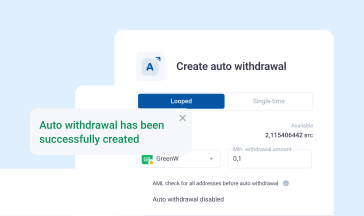
Set up automatic asset withdrawals from wallets once a predefined threshold is reached.

Built-in Gas Stations
Use separate addresses to pay network fees on ETH, TRX, and BNB. You set how many times each gas station can be used. After that, it’s replaced with a new one.

Accounting & Reports
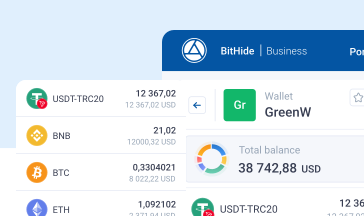
Track all wallets, transactions, balances, and currency fees in one place — with exportable reports for any period.

Operational Payouts
Through its Administrative plugin, finance teams can manage wallets, schedule payments, and execute instant mass payouts.

READ IN-DEPTH INSIGHTS & GUIDES
Explore Crypto Payment Gateways with Us
June 20, 2025
Cryptocurrency Tracking: from Wallet to Real IdentityFrom IP address to Instagram post: how your transactions can be tracked and linked to you.

December 2, 2024
Custodial vs. Non-Custodial Wallet: What’s the Difference and How to Choose?Discover how to achieve maximum security and anonymity.
November 19, 2024
Hot wallets vs. cold wallets: What is the difference, and which is safer?Discover the key differences between hot and cold wallets for cryptocurrency storage.
