Crypto in 2026: 6 Core Narratives & Industry Direction
6 key trends that will define crypto industry in 2026.
 396
396 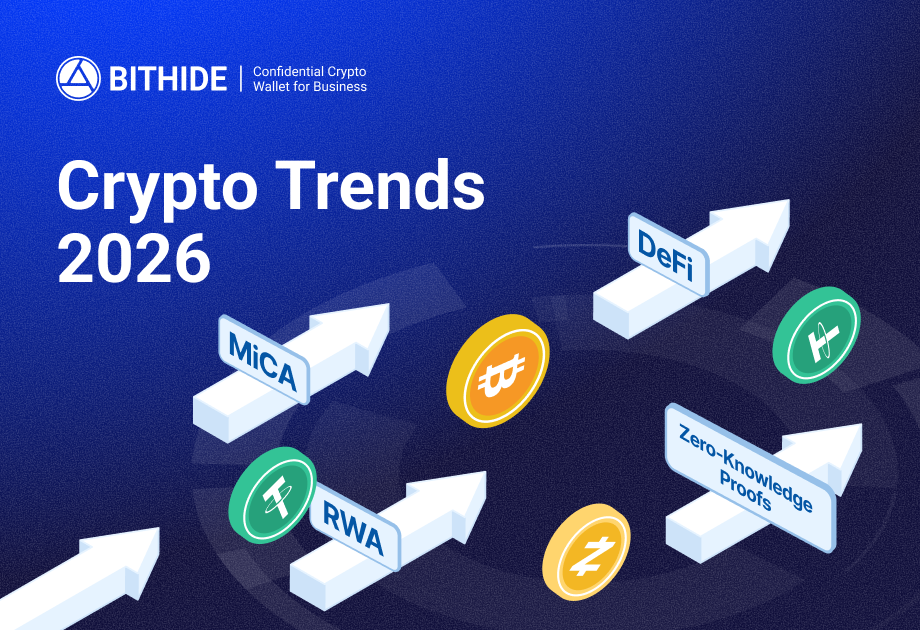
2025 became one of the most significant years in the history of the crypto industry. Bitcoin set new all-time highs multiple times, reaching as high as $126,000. Monthly adjusted volumes on stablecoins have surpassed those of major payment networks such as Visa and PayPal, making it clear that cryptocurrencies are no longer an experiment or a niche for enthusiasts, but a full-fledged component of the global financial system.
At the same time, the industry faced the costs of rapid growth. In 2025, more than $2.47 billion was stolen in hacker attacks, pushing questions of security, protocol design, and intermediary responsibility to the forefront. In parallel, market demand for blockchain privacy became increasingly evident: the price of Zcash surged severalfold, and the SEC hosted a roundtable on crypto user privacy.
What should we expect in 2026? In this article, we present the expert perspective of the Bithide team — six key narratives and the overarching direction of the crypto industry’s evolution.
6 Core Narratives
1. Regulation Takes Center Stage
MiCA becomes the global reference model, enforcing licensing, reserve rules, asset segregation, and consumer protection across the EU. Travel Rule adoption accelerates, forcing VASPs worldwide to collect sender-recipient data. Stablecoins face harmonized regulatory treatment (1:1 backing, redemption rights, reserve audits). Regulators push for identity in DeFi, rejecting «decentralization as an AML exemption.»
The result is that people have more confidence in the institutions, and following the rules becomes a way of competing.
2. Stablecoins Become Financial Rails
Stablecoin settlement volume surpasses Visa/Mastercard, transforming them into a global payment infrastructure. Banks and fintechs are beginning to issue and monetize stablecoins themselves.
The result is that stablecoins move from being used for speculation to becoming a regular part of the monetary system.
3. Neobanks Turn Crypto On
Fintechs launch crypto-native banking functions: cards with yield, multi-currency accounts, and real-time swaps. Crypto projects acquire regulated banking permissions to control compliance end-to-end. Users get DeFi yields and self-custody UX under a familiar banking wrapper.
The result is that banking becomes crypto-powered (not called «crypto»).
4. DeFi Becomes Institutional (and Boring… on Purpose)
The new prize is low-risk yield, not speculative farming. Tokenized Treasuries, money market funds, and credit products move on-chain. KYC-gated pools (Aave Arc-style) unlock institutional liquidity.
The result: DeFi positions itself as the back-end for global savings and treasury management.
5. Tokenization of Real-World Assets (RWA) Goes Mainstream
Bonds, funds, credit instruments, and eventually equities become tokenized for instant settlement. BlackRock-scale products ($1B+ AUM on-chain) prove real demand.DTCC and securities regulators approve DLT settlement pilots for regulated markets.
The result: blockchain may become the operating layer for capital markets.
6. Privacy Meets Regulation (Not Anarchy)
The EU and others restrict «anonymity-enhancing assets» to compel compliance with privacy. Identity-linked wallets are becoming the norm for meeting compliance standards.
Zero-Knowledge Proofs allow you to choose what information you share. You can prove that you meet the rules without sharing any personal information.
Conclusion
The events of 2025 showed that the crypto industry has reached a systemic scale: transaction volumes, risks, and regulatory scrutiny are now comparable to those of traditional finance. In 2026, the market enters a maturity phase. Regulation, stablecoins, institutional DeFi, tokenization, and controlled privacy are coming together into a single infrastructure.
Crypto in 2026 is no longer a sector. It becomes part of the operating system of global finance.
Contact the BitHide team to learn how our product can provide your business with security, and reliability when working with crypto assets.